3D Festival Diwali or Deepawali in India: A Strategic Asset for Modern Design
The visual language of the festival of lights is undergoing a significant transformation. For entrepreneurs, marketers, and creative professionals, the shift from traditional 2D illustrations to immersive 3D Festival Diwali or Deepawali in India assets represents more than just an aesthetic upgrade; it is a strategic decision that impacts brand perception, customer engagement, and commercial viability. High-quality PNG files on transparent backgrounds are no longer merely decorative elements; they are foundational components of a robust digital and physical product strategy. When executed correctly, these assets bridge the gap between cultural heritage and modern consumer expectations.
The Strategic Value of High-Resolution 3D Assets
In the competitive landscape of e-commerce and digital marketing, clarity and quality are non-negotiable. The availability of high-resolution 3D Festival Diwali or Deepawali in India graphics allows creators to maintain visual integrity across diverse mediums. Unlike standard raster images that degrade upon scaling, 300 dpi PNG files ensure that whether a design appears on a small phone sticker or a large fabric banner, the details remain crisp and professional. This technical fidelity directly correlates with perceived value. A consumer evaluating a t-shirt print or a mug design often makes split-second judgments based on image quality. Blurry or pixelated graphics signal a lack of professionalism, whereas sharp, 3D-rendered imagery suggests a premium product.
Furthermore, the "transparent background" feature of these PNG files offers operational efficiency. Designers can integrate these assets into complex compositions without the need for time-consuming manual masking or抠图 (cut-out) processes. This streamlines the workflow for agencies and freelancers alike, allowing for rapid prototyping and faster time-to-market during the critical pre-festival sales window. The ability to layer these elements over various textures—be it denim for hoodies, ceramic for mugs, or paper for invitation cards—without visual artifacts is a distinct competitive advantage.
Integrating 3D Diwali Assets into Product Lines
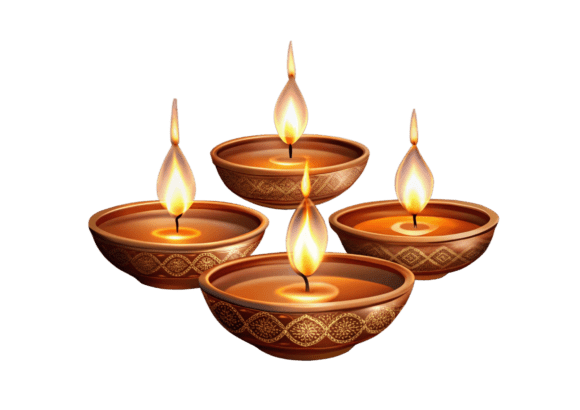
The versatility of 3D Festival Diwali or Deepawali in India graphics extends far beyond simple web decoration. These assets serve as the core engine for Print-on-Demand (POD) businesses and custom manufacturing. Consider the application on apparel. A 3D lamp or rangoli pattern printed on a cotton t-shirt creates a tactile illusion of depth that flat prints cannot achieve. This depth captures light differently, making the garment stand out in both physical retail environments and online catalogues.
- Apparel and Textiles: Hoodies, bags, and fabric patterns benefit immensely from the dimensional quality of 3D renders. The shadows and highlights inherent in the design add realism, making the festive motif feel like part of the material rather than a surface-level decal.
- Home Decor and Homeware: Pillows, mugs, and wall art require designs that resonate with the cozy, celebratory atmosphere of Deepawali. 3D assets provide the richness needed to elevate home decor items from generic souvenirs to collectible pieces.
- Digital Goods and Marketing: Website banners, social media overlays, and email headers gain immediate attention when utilizing vibrant, three-dimensional elements. In a crowded digital feed, a 3D Diwali graphic stops the scroll more effectively than a static icon.
For business owners, the key lies in intentional selection. Do not simply apply every available asset to every product. Instead, curate a collection that aligns with your brand's color palette and target demographic. A luxury brand might opt for gold-accented 3D diya lamps, while a youth-focused streetwear line might prefer bold, neon-infused 3D fireworks or crackers. Contextual alignment ensures that the design supports the brand narrative rather than distracting from it.
Commercial Viability and Licensing Clarity
One of the most critical aspects of utilizing 3D Festival Diwali or Deepawali in India resources is understanding the licensing framework. The ability to use these files for commercial purposes without watermarks removes a significant barrier to entry for small business owners and startups. However, "commercial use" requires a strategic approach to avoid legal pitfalls and market saturation.
When you acquire a zip file containing high-resolution PNGs, you are investing in a toolkit that should yield a return on investment (ROI). This means using the assets to create unique, sellable products rather than reselling the raw files themselves, unless explicitly permitted by the license terms. The value proposition here is the transformation of the digital asset into a tangible good or a compelling digital experience. Whether you are printing invitations for a corporate event or designing limited-edition phone cases, the freedom to edit and adapt these files allows for customization that meets specific client needs.
It is essential to verify the resolution requirements for your specific output method. While 300 dpi is the industry standard for print, ensuring that the final export settings match the printer's capabilities is crucial. Using a high-quality source file does not guarantee a perfect print if the downstream production process is flawed. Therefore, the strategic user will always test a sample run before committing to a bulk order, ensuring that the 3D effects translate well from screen to substrate.
Avoiding Common Pitfalls in Festive Design
Despite the advantages, there are risks associated with the indiscriminate use of festive graphics. The primary danger is visual clutter. 3D Festival Diwali or Deepawali in India assets are inherently detailed and vibrant. Placing too many such elements on a single design can overwhelm the viewer, diluting the message and reducing readability. A strategic designer knows when to exercise restraint. Sometimes, a single, well-placed 3D element serves as a powerful focal point, guiding the eye to the call-to-action or the product name.
Another risk is cultural insensitivity or misinterpretation. Diwali is a deeply spiritual and cultural celebration for millions. Using these symbols purely as generic "party" graphics without understanding their significance can alienate the very audience you aim to reach. It is vital to approach the design process with respect and research. Understand what the motifs represent—the victory of light over darkness, knowledge over ignorance—and let that narrative inform your design choices. This depth of understanding transforms a simple graphic into a meaningful connection with the consumer.
Furthermore, relying solely on pre-made assets without adding unique value can lead to market homogenization. If every seller uses the exact same set of PNGs for their t-shirts, differentiation becomes difficult. To mitigate this, combine the 3D assets with original typography, custom color grading, or complementary hand-drawn elements. Use the provided files as a foundation, not the entire structure. This hybrid approach ensures your offerings remain unique even within a popular trend.
Planning Your Diwali Campaign with 3D Assets
To maximize the impact of these resources, planning must begin well in advance of the festival. The timeline for Deepawali varies slightly each year, but the preparation phase should start at least two to three months prior. During this period, download the Zip File containing the high-resolution PNGs and organize them by theme, color, and complexity. Create a mood board that aligns these assets with your upcoming product launches.
- Asset Audit: Review the library of 3D graphics. Identify which ones offer the best contrast and detail for your intended applications.
- Prototype Development: Create mockups for T-shirts, mugs, and digital banners. Test how the transparent backgrounds interact with different product colors.
- Market Testing: Run small-scale ads or social media polls featuring your designs to gauge audience reaction before full production.
- Inventory Management: Based on the feedback, finalize the designs and place orders for POD or bulk printing, ensuring stock arrives before the peak shopping days.
This structured approach minimizes waste and maximizes sales potential. It treats the design files not as impulse purchases but as strategic inventory for your creative pipeline.
Long-Term Brand Positioning
While Diwali is a seasonal event, the way a brand handles its seasonal campaigns influences long-term perception. Consistently delivering high-quality, culturally resonant, and visually stunning designs builds trust. Customers who appreciate the effort put into a 3D Diwali campaign are more likely to return for other seasons. They associate the brand with quality and attention to detail.
Moreover, the skills and workflows developed during this process—managing high-resolution files, optimizing for print, and integrating 3D elements—are transferable to other projects. The discipline of using 3D Festival Diwali or Deepawali in India assets intentionally fosters a culture of excellence within a creative team. It encourages a mindset where every pixel counts and every design decision serves a purpose.
Ultimately, the power of these graphics lies in their ability to tell a story. When you download these files, you are acquiring the tools to participate in a global celebration. By applying them with strategic foresight, respecting their cultural roots, and leveraging their technical quality, you position your business not just as a participant in the market, but as a leader in creative expression. The result is a portfolio of work that stands out, sells well, and honors the spirit of the festival.