Bunny House Inside a Tree 3D Pop Up: A Practical Evaluation
The Bunny House Inside a Tree 3D Pop Up represents a specific niche within the world of digital paper crafting. Unlike static illustrations or pre-assembled decorations, this design is a downloadable digital file intended for DIY creation. It features a layered paper art concept that, when unfolded, reveals a whimsical scene of a bunny house nestled within the structure of a tree. The transition from a flat sheet to a three-dimensional object relies on precise engineering and careful assembly. For individuals considering this project, understanding the mechanics, required tools, and potential outcomes is essential before making a purchase.
Understanding the Design and Mechanics
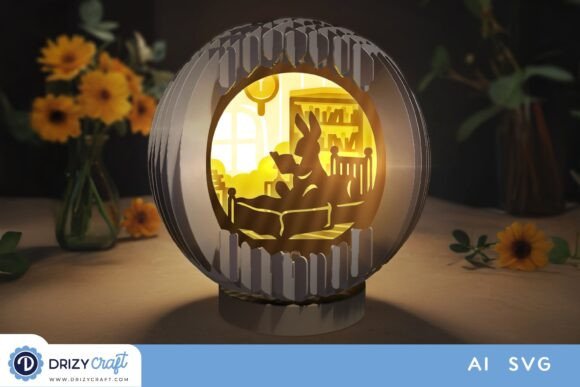
The core appeal of the Bunny House Inside a Tree 3D Pop Up Folded lies in its transformation. In its resting state, the design is compact and folded, resembling a standard card or a flat decorative panel. However, the internal geometry is designed so that opening the piece triggers a mechanical expansion. This creates depth and dimensionality, allowing the tree branches and the house to stand out from the background plane.
This type of pop-up mechanism requires specific structural integrity. The design includes multiple layers that must be glued together in a precise sequence. The final result is not merely a picture but a small architectural model made of paper. Because the product is a digital download, the buyer receives a ZIP file containing various formats, primarily AI (Adobe Illustrator) and SVG (Scalable Vector Graphics). These files are vector-based, meaning they do not lose quality when resized, provided the aspect ratio remains constant. This flexibility allows creators to adjust the scale of the project to fit different needs, such as a large wall hanging or a small desk ornament.
Reasons to Consider This Project
There are several practical reasons why a crafter might choose the Bunny House Inside a Tree 3D Pop Up. First, it offers a high degree of customization. Since the user controls the printing process, they can select paper types ranging from heavy cardstock for durability to textured papers for an artistic finish. This control extends to color; while the preview images show specific hues, the final output depends entirely on the printer and the paper stock chosen by the user.
Secondly, the versatility of the SVG format makes this design accessible to users with modern cutting machines. Owners of Silhouette or Cricut devices can import the SVG file directly into their software. This eliminates the need for manual tracing and significantly speeds up the cutting process, ensuring clean edges and accurate folds. For those without electronic cutters, the design remains viable using traditional tools like art knives and scissors, though this requires more time and manual dexterity.
Furthermore, the finished product serves multiple functions. It can function as a standalone piece of decor, a unique greeting card, or a holiday ornament. By integrating small LED lights into the design, the piece can be transformed into a glowing nightlight or a festive accent, adding a layer of ambiance that static paper art cannot achieve.
Benefits and Tradeoffs
Evaluating the benefits of this project requires weighing the creative satisfaction against the effort involved. The primary benefit is cost-effectiveness. Purchasing a single digital file is generally less expensive than buying a pre-made, high-quality 3D paper craft. Additionally, the ability to resize the SVG means one purchase can yield multiple projects of varying sizes.
However, there are tradeoffs. The most significant consideration is the skill level required. Assembling a complex 3D pop-up involves folding along numerous score lines and applying adhesive to specific tabs. Mistakes in alignment can compromise the structural stability of the pop-up mechanism. If a fold is creased incorrectly or glue is applied to the wrong surface, the "pop" effect may fail, or the structure may collapse under its own weight.
Another tradeoff is the lack of physical materials included. The download provides only the digital blueprint. The user must source their own paper, adhesives, and cutting tools. While this offers freedom of choice, it also adds steps to the procurement process. Users must ensure they have the correct weight of paper; if the stock is too thin, the structure will be flimsy, but if it is too thick, it may be difficult to fold cleanly or may not fit inside a standard envelope if intended as a card.
When This Design Is a Strong Fit
The Bunny House Inside a Tree 3D Pop Up Folded is an excellent choice for specific scenarios. It is particularly well-suited for individuals who enjoy hands-on crafting and have experience with paper engineering. If you are looking for a personalized gift that demonstrates effort and creativity, this project fits perfectly. The ability to customize the size and add elements like LEDs makes it a standout option for friends, family members, or special occasions where a generic store-bought item would feel impersonal.
It is also a strong fit for crafters who already own cutting machines. The inclusion of SVG files ensures that the workflow is streamlined for these users. If your goal is to produce a batch of identical items for a party favor or a boutique shop, the scalability of the vector file allows for efficient production runs without sacrificing detail.
When Alternatives May Be Worth Considering
Despite its advantages, this project may not be the right choice for everyone. If you require a finished product immediately, a digital download is not suitable. The time required for downloading, printing, cutting, scoring, and gluing can range from an hour to several hours depending on complexity and experience. In situations where time is a critical constraint, purchasing a pre-assembled 3D decoration is a more practical alternative.
Additionally, beginners with no experience in paper crafting might find the assembly process frustrating. Without prior knowledge of how to score paper or apply glue invisibly, the final result may look amateurish. For those new to the hobby, simpler 2D printable designs or kits that include pre-cut pieces might offer a better learning curve before attempting a multi-layered 3D pop-up.
Finally, consider the limitations of home printing. If you do not have access to a high-quality printer capable of handling cardstock, the visual impact of the design may suffer. Color variations between the preview image and the printed result are common due to lighting and ink differences. If color accuracy is paramount for your project, professional printing services or pre-colored materials should be considered.
Practical Decision-Making Insights
To determine if the Bunny House Inside a Tree 3D Pop Up aligns with your goals, assess your current resources and expectations. Do you have the necessary tools? Ensure you have access to a printer, sharp cutting instruments, and appropriate adhesives like double-sided tape or liquid glue. Do you have the patience for assembly? The precision required for pop-up mechanisms demands attention to detail.
Consider the end use. If the goal is to create a durable ornament, plan to use heavier cardstock and seal the paper to prevent wear. If the goal is a delicate card, lighter paper may suffice, but handle with care. Remember that the images provided in the preview are for reference only; the final product's appearance will depend on your material choices. By managing these expectations and preparing adequately, you can successfully transform a digital file into a tangible, beautiful piece of art.