Smart Home IoT 3D Icon: A Visual Asset Evaluation
In the rapidly evolving landscape of digital product design, the visual representation of technology plays a critical role in user comprehension and engagement. As smart home ecosystems expand to include everything from voice assistants to security monitoring systems, designers require assets that accurately reflect these complex networks without overwhelming the user interface. The Smart Home IoT 3D Icon pack emerges as a specific solution for this need, offering a collection of high-resolution renders designed to visualize modern connectivity. This evaluation examines the characteristics, utility, and appropriate use cases for these assets, helping designers and developers determine if they align with their project requirements.
Understanding the Smart Home IoT 3D Icon Style
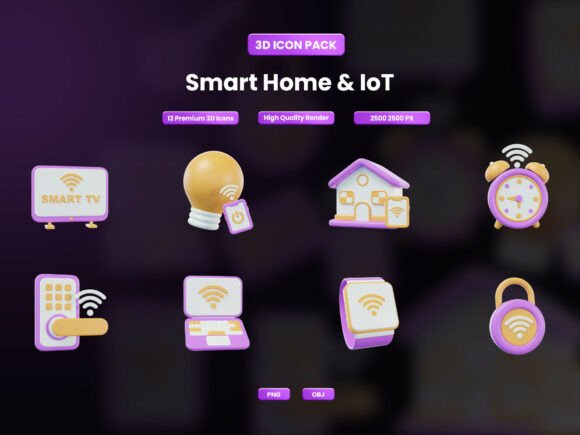
The core value proposition of the Smart Home IoT 3D Icon lies in its distinct aesthetic approach. Unlike traditional flat vector graphics or hyper-realistic photorealism, this pack utilizes a "chubby smooth" 3D style. This design language is characterized by rounded edges, soft lighting, and vibrant colors that create a friendly and approachable appearance. In the context of Internet of Things (IoT) devices, which can often feel cold or intrusive, this stylistic choice serves a functional purpose: it humanizes technology.
The pack typically includes essential hardware representations such as smart lights, thermostats, WiFi routers, smart plugs, and security cameras. Beyond standard hardware, the collection extends into futuristic concepts, featuring metaverse-related objects like VR headsets, avatars, crypto coins, holograms, and portals. These assets are delivered as high-resolution PNG files, usually at 2500x2500 pixels with transparent backgrounds, ensuring scalability across various screen densities and layout configurations.
Reasons to Consider 3D Icons for IoT Projects
Designers might be drawn to the Smart Home IoT 3D Icon for several practical reasons related to current UI/UX trends. First, the depth provided by 3D rendering allows for better differentiation between active and inactive states within a dashboard. For instance, a glowing smart plug icon can intuitively signal power status more effectively than a flat silhouette. Second, the "chubby" aesthetic has gained significant traction in consumer-facing applications because it reduces cognitive load. Complex automation systems become less intimidating when represented by soft, playful visuals rather than rigid technical diagrams.
Furthermore, the inclusion of metaverse and futuristic elements positions these assets as forward-looking. As the line between physical smart homes and virtual environments blurs, having a cohesive visual library that bridges both worlds is advantageous. This makes the pack particularly relevant for companies building platforms that integrate physical device control with digital asset management or virtual reality interfaces.
Benefits and Tradeoffs
Adopting the Smart Home IoT 3D Icon offers clear benefits, primarily in terms of visual consistency and immediate recognition. Because the icons share a unified rendering engine and lighting setup, they create a cohesive brand identity across an application. The high resolution ensures that these assets remain crisp on high-DPI mobile screens and large desktop monitors alike. Additionally, the transparent background format simplifies integration into existing color schemes without the need for extensive post-processing.
However, there are tradeoffs to consider. The primary limitation is file size. High-resolution 3D rendered PNGs are significantly larger than SVG vectors or simple PNG sprites. For bandwidth-constrained applications or users on slower connections, loading multiple large images could impact performance. Designers must weigh the visual appeal against the potential latency introduced by larger asset sizes. Another consideration is flexibility; unlike vector graphics, rasterized 3D icons cannot be easily recolored or reshaped without returning to the original 3D source files, which are not included in the standard pack. If a project requires dynamic theming where icons change color based on user settings, these static images may present a workflow challenge.
Ideal Use Cases and Scenarios
The Smart Home IoT 3D Icon is a strong fit for specific types of projects where visual polish and friendliness are priorities. It excels in:
- Consumer Mobile Applications: Apps controlling home automation benefit from the approachable style, making the interface feel less industrial and more lifestyle-oriented.
- Tech Dashboards and Admin Panels: For internal tools or customer-facing dashboards that display device status, the 3D depth helps distinguish different categories of devices quickly.
- Landing Pages and Marketing Materials: The colorful and modern look is effective for infographics, website headers, and promotional content aimed at selling smart home solutions.
- Futuristic UI Concepts: Projects involving Web3, crypto, or virtual reality integrations can leverage the included metaverse assets to maintain a consistent thematic narrative.
In these scenarios, the visual impact of the icons supports the narrative of innovation and ease of use, directly influencing user perception of the brand's technological capability.
When to Consider Alternatives
Despite its strengths, the Smart Home IoT 3D Icon may not be the optimal choice for every project. Designers should consider alternatives in the following situations:
If the project targets a strictly enterprise or industrial audience, the "chubby" style might appear too informal. B2B security systems or professional facility management software often benefit from a more austere, minimalist, or flat design language that conveys seriousness and precision. In these cases, a monochromatic vector icon set would likely be more appropriate.
Additionally, if the application requires strict adherence to a limited color palette or frequent dynamic recoloring, static PNGs are inefficient. Vector-based icon libraries allow for CSS manipulation, enabling real-time color changes without loading new image files. Similarly, for projects with extremely tight performance budgets, such as lightweight kiosks or low-bandwidth IoT gateways, the overhead of high-res 3D images might be prohibitive compared to lightweight SVGs.
Practical Decision-Making Insights
To determine if this asset pack aligns with your goals, evaluate your project's primary constraints and objectives. Begin by auditing your target audience. Do they respond better to playful, modern aesthetics or professional minimalism? If the former, the Smart Home IoT 3D Icon provides a ready-made solution that saves significant production time compared to commissioning custom 3D models.
Next, assess your technical infrastructure. Calculate the total payload increase if you were to replace existing flat icons with these high-resolution 3D versions. Implement lazy loading or image compression strategies if necessary to mitigate performance impacts. Finally, consider the longevity of the design. While the "chubby" trend is currently popular, ensure that the style fits your long-term brand strategy and won't date your interface prematurely.
Ultimately, the decision to use the Smart Home IoT 3D Icon should balance aesthetic desires with functional realities. When used in the right context—consumer apps, marketing visuals, and modern dashboards—it can significantly enhance the perceived value of a smart home platform. However, for performance-critical or highly formal applications, traditional vector approaches may offer a more sustainable path forward.