3D Gymnastics Medal Holder Laser Cut: A Digital Design Evaluation
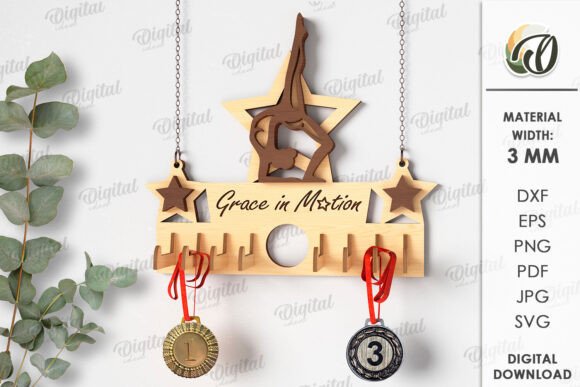
For coaches, gymnasts, and parents looking to honor athletic achievement with a tangible display, the 3D Gymnastics Medal Holder Laser Cut represents a significant shift in how commemorative items are produced. Unlike traditional mass-manufactured trophies found in big-box stores, this digital asset offers a pathway to custom fabrication that balances aesthetic appeal with structural integrity. It is crucial to understand from the outset that this product is not a physical object delivered to your doorstep. Instead, it is a comprehensive digital package containing vector files intended for use with laser cutting equipment or CNC machines. The photographs associated with the listing serve strictly as visual inspiration, demonstrating the potential outcome when the design is rendered in materials like acrylic, wood, or MDF.
The value proposition of the 3D Gymnastics Medal Holder Laser Cut lies in its flexibility and the control it grants the user over the final production. By purchasing the design files, you acquire the intellectual property necessary to manufacture the holder according to your specific material preferences, color schemes, and dimensional requirements. This approach is particularly relevant for professionals and small business owners who wish to create unique inventory without the overhead of maintaining stock. Whether you are a gym owner creating awards for a season finale or a parent crafting a personalized gift, the ability to manipulate the source files allows for a level of customization that pre-made products simply cannot match.
Understanding the Digital Format and File Deliverables
The core utility of this product stems from the variety of file formats included in the downloadable zip folder. The package typically contains SVG, DXF, EPS, PDF, JPEG, and PNG files, each serving a distinct purpose within the digital fabrication workflow. For users operating laser cutters, the SVG (Scalable Vector Graphics) and DXF (Drawing Exchange Format) files are paramount. These vector formats ensure that lines remain crisp and precise regardless of the scale at which the design is cut, preventing the pixelation issues often seen with raster images.
The inclusion of EPS files provides compatibility with professional design software such as Adobe Illustrator, allowing for further modification if needed. Meanwhile, the PDF, JPEG, and PNG versions offer convenience for previewing the design on screens, sharing proofs with clients, or using the image for promotional materials before the physical cutting process begins. This multi-format delivery system ensures that the 3D Gymnastics Medal Holder Laser Cut is accessible to a wide range of users, from hobbyists with basic software to professional makers utilizing industry-standard CAD tools.
Design Characteristics and Structural Integrity
When evaluating the design itself, the term "3D" refers to the layered construction method inherent to laser-cut projects. Rather than being a solid block of material, the medal holder is composed of multiple flat layers that interlock or stack to create depth and dimension. This technique is highly effective for displaying medals, as it allows ribbons to hang freely while keeping the metal medallions securely positioned. The design likely incorporates slots or channels specifically engineered to accommodate standard ribbon widths, ensuring a snug fit without the need for additional adhesives or fasteners.
The aesthetic quality of the 3D Gymnastics Medal Holder Laser Cut depends heavily on the precision of the vector paths. A well-constructed design will feature clean lines and accurate joinery points, which are critical for assembly. If the kerf (the width of material removed by the laser) is accounted for in the design, the resulting pieces will fit together seamlessly. This attention to detail distinguishes high-quality digital assets from generic templates. Users should inspect the preview images closely to assess the complexity of the layering and the clarity of the gymnastics-themed elements, such as silhouettes of athletes or apparatus icons.
Practical Applications and Workflow Integration
Integrating the 3D Gymnastics Medal Holder Laser Cut into a creative workflow requires access to appropriate hardware. For those who own a desktop laser cutter, the process is straightforward: import the vector file, adjust settings based on the chosen material thickness, and execute the cut. For users without personal machinery, these files can be sent to a local maker space or an online laser cutting service. This "print-on-demand" model eliminates the risk of unsold inventory and allows for just-in-time production tailored to specific events.
In a professional context, such as a gymnastics club or a trophy shop, this digital asset offers scalability. You can produce a single unit for a special award or hundreds for a regional competition. The consistency of the digital file ensures that every unit produced maintains identical dimensions and alignment, a level of uniformity that is difficult to achieve with hand-crafted alternatives. Furthermore, the ability to swap materials means the same design can yield different market segments; for instance, using birch plywood for a rustic look or colored acrylic for a modern, vibrant finish.
Material Selection and Durability Considerations
While the design is versatile, the longevity of the final product relies on material selection. Wood and MDF are cost-effective options that provide a warm, traditional appearance but may require sealing to protect against moisture. Acrylic, on the other hand, offers a sleek, transparent look that highlights the medals effectively but can be more prone to scratching. When planning production, consider the environment where the holder will reside. A holder displayed in a home office might benefit from the durability of hardwood, whereas a temporary display for an event could utilize lighter, less expensive materials.
The layered nature of the 3D Gymnastics Medal Holder Laser Cut also influences its stability. Thicker materials generally result in a sturdier base, reducing the likelihood of tipping. However, thicker materials require longer cutting times and potentially higher power settings. Users must balance the desire for robustness with the practical constraints of their equipment and budget. Testing the design on scrap material before committing to premium stock is a recommended practice to verify fit and function.
Target Audience and Use Cases
This digital product is ideally suited for a diverse audience ranging from serious hobbyists to established entrepreneurs. Small business owners specializing in custom awards can leverage the 3D Gymnastics Medal Holder Laser Cut to expand their catalog without significant upfront investment. By offering a niche product tailored to gymnastics enthusiasts, they can differentiate themselves from competitors selling generic sports memorabilia.
Educators and coaches will find particular value in the ability to create meaningful recognition tools for students and athletes. In an era where personalized experiences are highly valued, a custom-designed medal holder serves as a lasting memento of an athlete's journey. Parents seeking to commemorate a child's achievements can also utilize these files to craft a one-of-a-kind display piece that reflects the individual's personality and accomplishments.
Limitations and Realistic Expectations
It is essential to maintain realistic expectations regarding the purchase of digital files. The primary limitation is the requirement for technical capability. Users must possess the knowledge to handle vector files and operate laser cutting equipment, or the resources to outsource the manufacturing process. Without these skills or connections, the digital files alone hold no immediate value. Additionally, the final aesthetic is contingent upon the quality of the materials used and the precision of the cutting machine. Poorly calibrated equipment can result in burnt edges or misaligned parts, compromising the professional appearance of the holder.
Furthermore, the design is static; while it can be scaled, significant alterations to the geometry may require advanced editing skills. Users expecting a plug-and-play solution that works instantly on any device without setup should reconsider whether this product fits their current needs. However, for those willing to engage with the fabrication process, the rewards in terms of customization and uniqueness are substantial.
Conclusion on Value and Usability
The 3D Gymnastics Medal Holder Laser Cut stands out as a practical resource for those invested in the creation of high-quality, customized awards. Its strength lies in the versatility of the included file formats and the adaptability of the design to various materials and production scales. While it demands a certain level of technical proficiency or access to manufacturing services, the end result offers a superior alternative to mass-produced options in terms of personalization and craftsmanship.
For professionals and hobbyists alike, this digital asset provides a reliable foundation for producing memorable displays that honor athletic dedication. By understanding the capabilities and limitations of the design, users can effectively integrate it into their workflows to deliver exceptional results. As with any digital tool, success depends on the skill of the operator and the quality of the execution, but the potential for creating something truly original remains a compelling reason to explore this option.