Brick Texture Numbers 3D SVG: A Practical Guide for Digital Creators
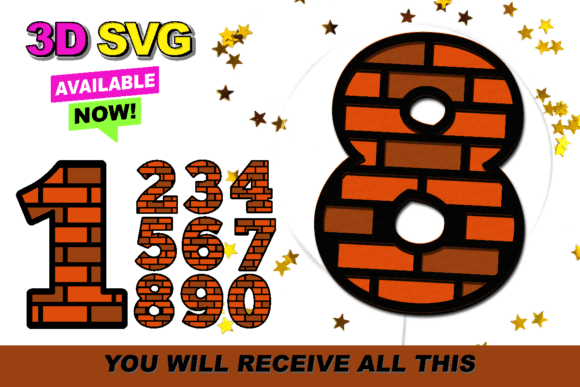
In the landscape of digital design and crafting, the choice of texture often dictates the final aesthetic impact of a project. The Brick Texture Numbers 3D SVG collection represents a specific niche within this ecosystem, offering numerals from 0 to 9 rendered with a distinct masonry pattern and three-dimensional depth. Unlike flat vector graphics, these assets simulate the visual weight and tactile quality of brickwork, providing creators with a robust tool for adding character to various media. This resource is not merely a set of images; it is a functional component designed to integrate seamlessly into established workflows involving cutting machines, printing presses, and graphic design software.
The utility of this collection lies in its format and versatility. As an SVG (Scalable Vector Graphic), the files maintain crisp edges at any scale, which is critical for both large-format signage and intricate small-scale details like stickers or cake toppers. The "compressed digital arrangement" mentioned in the product specifications ensures that the file size remains manageable without sacrificing resolution, facilitating faster upload times and smoother performance in design applications. For professionals managing tight deadlines or hobbyists working on multiple projects simultaneously, this efficiency is a significant advantage.
Integrating Brick Textures into Your Design Workflow
Understanding where the Brick Texture Numbers 3D SVG fits into a broader creative process is essential for maximizing its potential. The workflow typically begins with concept planning, moves through asset selection and manipulation, and concludes with physical production. These numerals are most effective when introduced during the asset selection phase, serving as the foundational element upon which other design decisions are built.
Before importing the files into your preferred software, it is prudent to assess the project requirements. Are you creating a rustic-themed birthday banner, a modern industrial logo, or a textured patch for a custom garment? The brick motif suggests durability, structure, and a touch of urban grit. By selecting this texture early, you align your color palette, font choices for accompanying text, and material selection with the intended mood. For instance, pairing the brick numbers with distressed white vinyl creates a high-contrast, vintage look, while using them on dark slate materials enhances the three-dimensional effect.
Once the concept is solidified, the actual implementation involves importing the SVG files into your design environment. The collection is specifically optimized for platforms like Silhouette Studio and Cricut Design Space. However, the workflow extends beyond these two ecosystems. Because SVGs are industry-standard vector formats, they can be opened in Adobe Illustrator, Inkscape, CorelDRAW, and other professional tools. This interoperability allows designers to layer the brick numbers over photographs, combine them with other vector shapes, or apply complex effects before sending the design to a cutter or printer.
Optimizing Compatibility and Software Settings
While the collection is versatile, ensuring compatibility with your specific hardware and software version is a critical step in the preparation phase. Not all cutting machines handle 3D effects identically. Some may require the design to be flattened or separated into layers to cut accurately. When working with Silhouette Studio or Cricut Design Space, users should verify that the "weld" or "attach" functions are utilized correctly to prevent the machine from cutting out individual bricks as separate pieces unless that is the desired outcome.
A common pitfall in processing textured SVGs is the misinterpretation of internal lines. The brick pattern consists of numerous intersecting lines that define the mortar between bricks. If these lines are not properly grouped or welded, the cutting mat may become cluttered with unnecessary blade movements, leading to wasted time and material. To mitigate this, designers should inspect the node structure of the imported SVG. In many cases, the files are pre-welded for convenience, but a quick audit ensures that the software recognizes the entire number as a single object rather than a collection of hundreds of tiny rectangles.
Furthermore, consider the material thickness and blade settings. The 3D nature of the design implies depth, but the physical output depends on the substrate. When cutting vinyl, a standard blade setting usually suffices. However, if applying these designs to thicker materials like chipboard or felt for 3D cake toppers, adjusting the pressure and speed becomes necessary. Testing a single numeral on a scrap piece of material before committing to the full sequence (0–9) is a best practice that saves resources and prevents frustration.
Strategic Use Cases Across Industries
The application of Brick Texture Numbers 3D SVG spans a wide array of industries and personal projects. From small business owners launching merchandise lines to educators creating classroom decorations, the use cases are defined by the need for durable, visually engaging typography.
- Custom Apparel and Merchandise: Entrepreneurs selling custom-printed tees can leverage these textures to create unique streetwear aesthetics. The brick pattern adds a layer of complexity that stands out against standard cotton fabrics. When combined with heat-transfer vinyl (HTV), the result is a shirt that feels substantial and looks professionally designed.
- Celebratory Decorations: Birthday celebrations often rely on thematic consistency. Using brick-textured numbers for banners, table centerpieces, or cupcake toppers provides a cohesive look for themes ranging from construction parties to urban-style milestones. The 3D effect catches the light differently than flat numbers, adding visual interest to photo backdrops.
- Sticker Production: Stickers remain a high-demand product for creators. The detailed brick pattern holds up well under glossy laminate, making the stickers appear raised and tactile. This is particularly effective for laptop decals, water bottle labels, or planner accessories where texture adds value.
- Educational Materials: Educators can use these assets to create engaging counting aids or math manipulatives. The distinct texture helps children differentiate numbers visually, while the durability of the printed or cut material withstands frequent handling in a classroom setting.
Workflow Efficiency and Asset Management
For those managing multiple projects, organization is key to maintaining efficiency. The Brick Texture Numbers 3D SVG collection comes as a complete set from 0 to 9, which simplifies inventory management. Instead of sourcing individual numbers from different vendors—risking inconsistencies in style or file quality—creators have a unified toolkit. This consistency is vital for branding; a mismatched font or texture across a series of products can undermine professional credibility.
To streamline the process, establish a dedicated folder structure for your digital assets. Store the original SVG files separately from your working project files. When starting a new job, duplicate the master file rather than editing the original. This practice protects the integrity of the source data and allows you to experiment with colors, sizes, and layouts without fear of losing the base design. Additionally, keep a record of the specific machine settings that worked best for each material type used with these numbers. Over time, this log becomes a valuable reference that reduces setup time for future orders.
Quality Control and Long-Term Value
Investing in high-quality digital assets like the Brick Texture Numbers 3D SVG offers long-term value through reusability and adaptability. Unlike raster images that pixelate when enlarged, these vector files can be scaled infinitely. This means a design created for a small sticker today can be repurposed for a storefront sign tomorrow without any loss in clarity. The initial effort spent learning how to manipulate these files pays dividends in flexibility.
Quality control also extends to the final output. Before presenting a finished product to a client or posting it for sale, inspect the edges for clean cuts and check for any missed sections in the brick pattern. The intricate nature of the texture requires precise calibration. If a section appears jagged or incomplete, it may indicate a dull blade or incorrect pressure settings. Addressing these issues immediately ensures that the final product meets professional standards.
Ultimately, the integration of this numerical toolkit into your routine empowers you to elevate your creative output. Whether you are crafting a one-of-a-kind gift, launching a new product line, or simply exploring a new design technique, the combination of the brick texture and 3D rendering offers a distinctive flair. By understanding the technical requirements, planning your workflow effectively, and leveraging the compatibility of these files across various platforms, you unlock boundless possibilities for innovation. The journey from a digital file to a tangible creation is streamlined, allowing your imagination to thrive and your projects to stand out in a crowded marketplace.